
Libertarian Party Redesign
ROLE
RESULTS
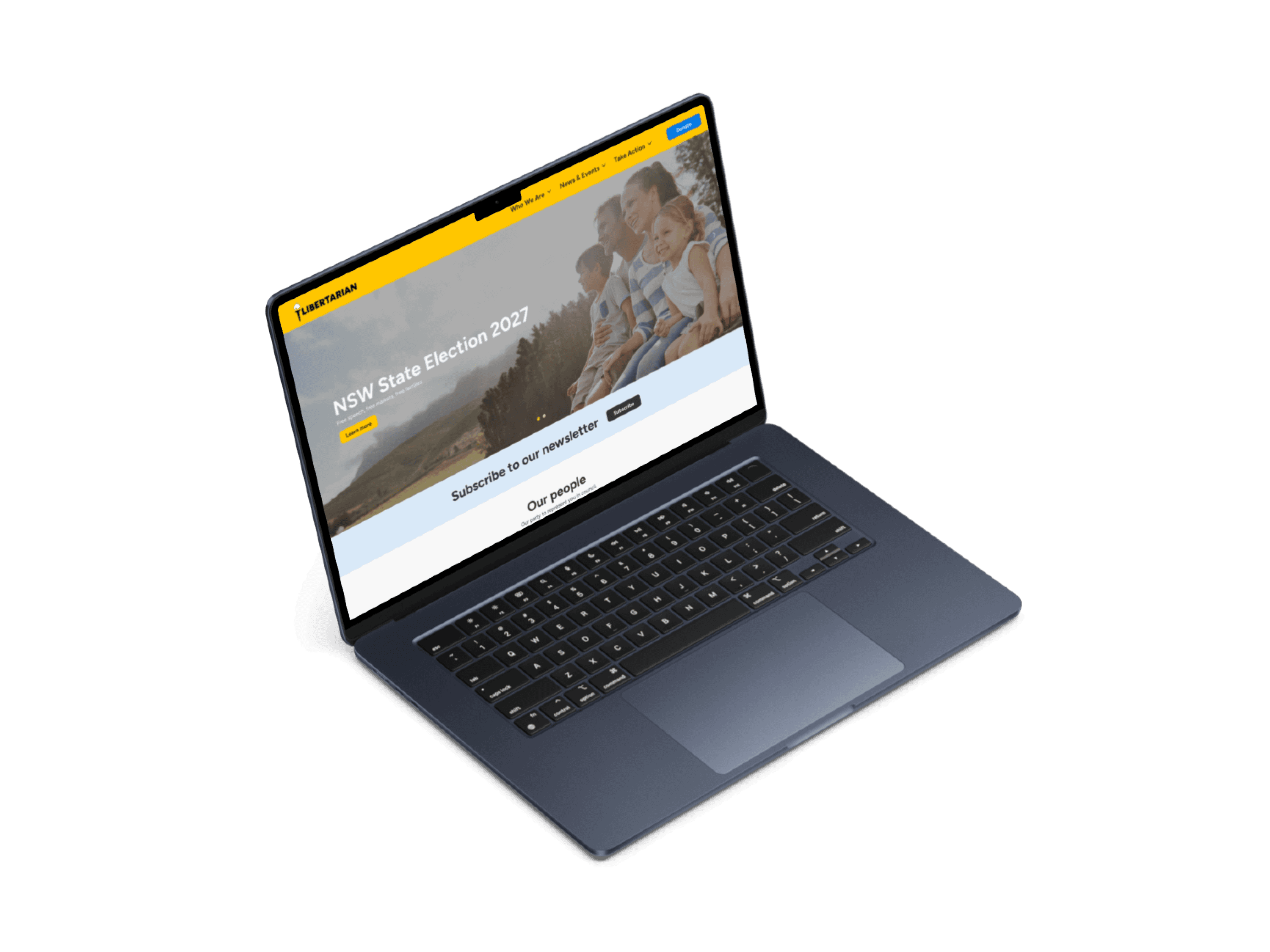
80% increase in time spent on home
8% uplift in active users
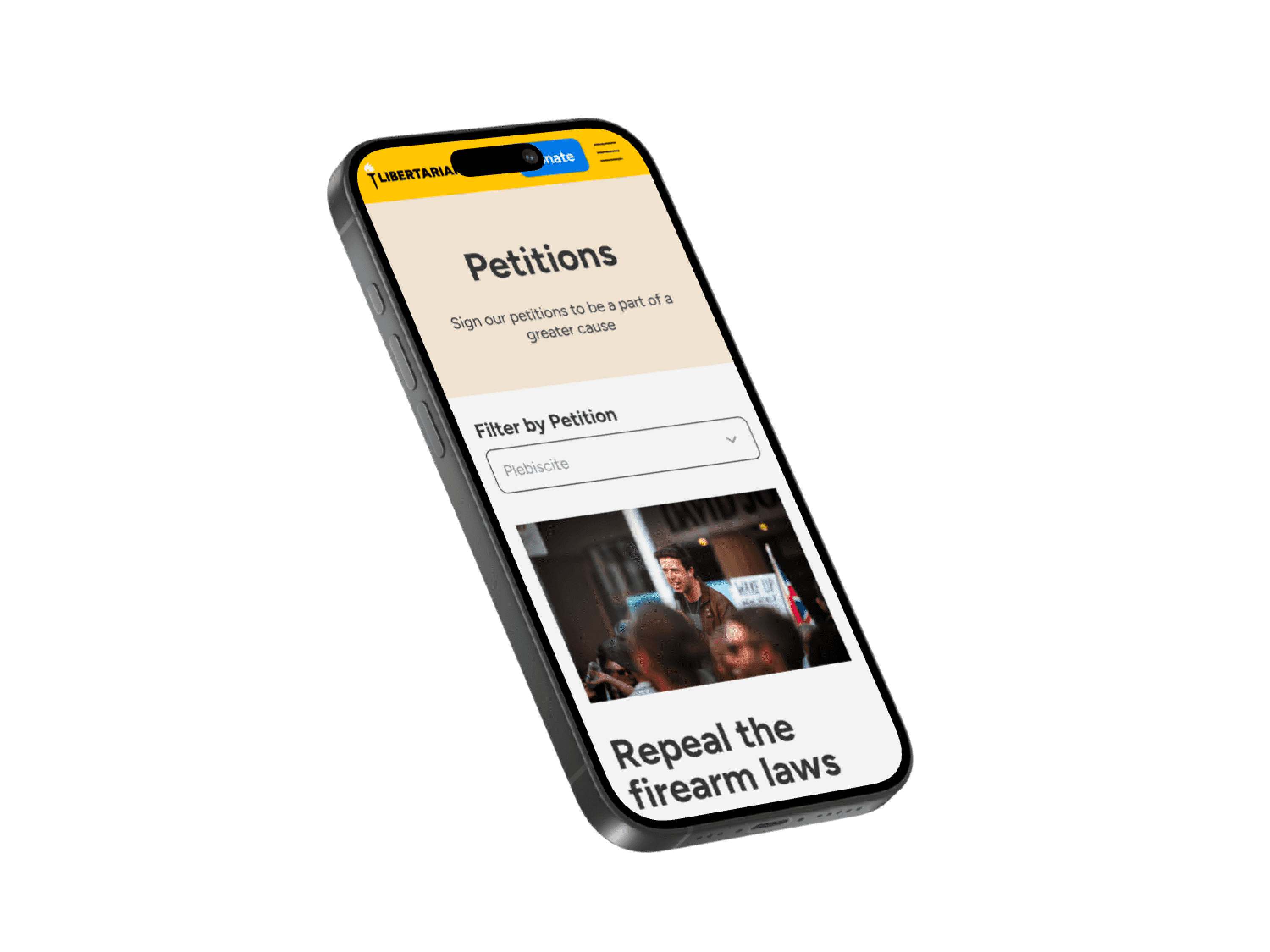
14% increase in mobile view
PROBLEM
The Libertarian Party of Australia's existing website was undermining its own mission. Dense, unstructured content, an overloaded navigation of 8+ top-level items, no prominent calls to action, and inconsistent application of brand assets meant the site was failing across all three of its core objectives: informing newcomers about the party's philosophy, establishing credibility as a legitimate political force, and converting visitors into members, donors, and volunteers. Approximately 60% of homepage content received negligible scroll engagement, and conversion paths for membership and donation had significant drop-off due to friction.
Building a foundation to align with business and user needs
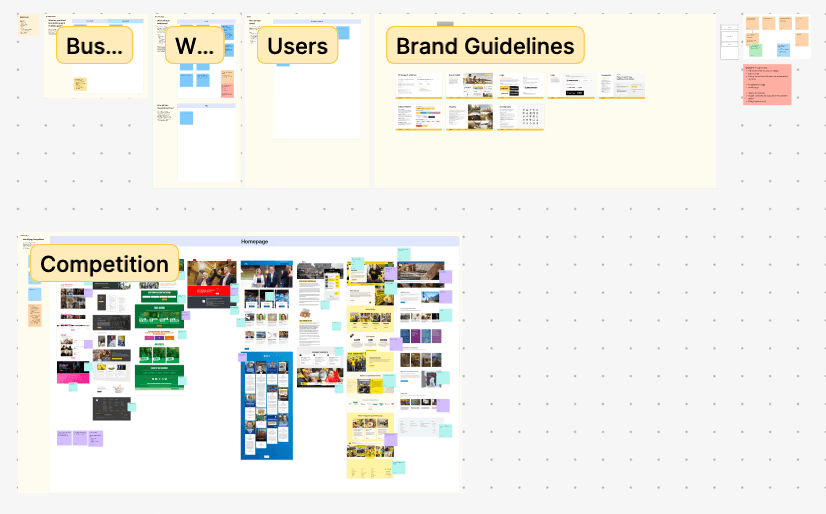
To kick off the project, I ran a workshop with the Libertarians party to define their goals, website vision, user needs, and brand constraints. This surfaced two distinct visitor types with different needs: curious newcomers encountering libertarian ideas for the first time and active supporters seeking friction-free paths to donate, join, or volunteer. The existing site addressed neither group effectively.
I conducted a competitive audit of 6+ organisations spanning Australian political parties and non-profit organisations and identified patterns:
Concrete statistics anchors early credibility
Single dominant call-to-actions above the fold
People-led hero banners that prioritise strong identity
These principles directly informed the redesign strategy.
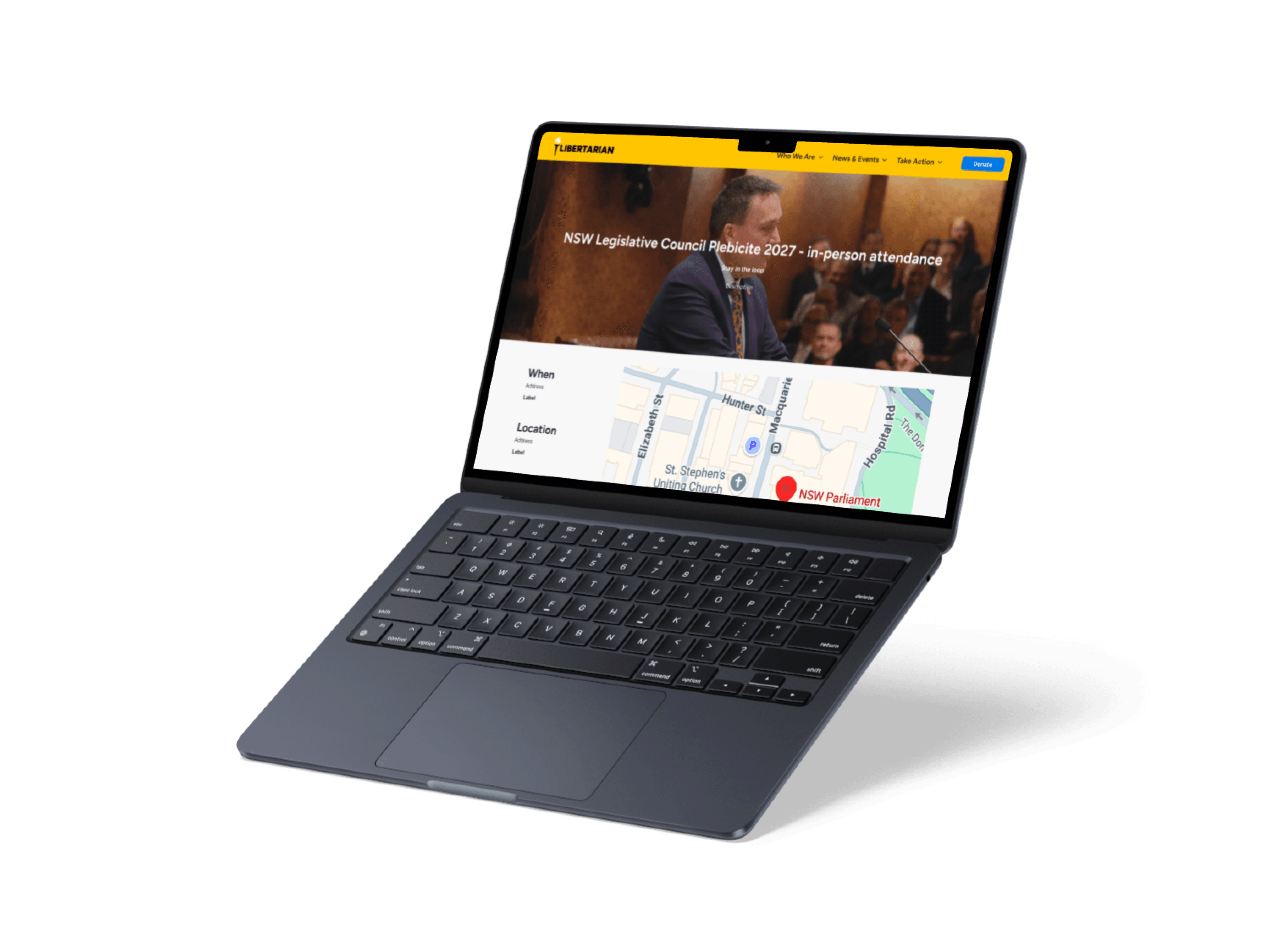
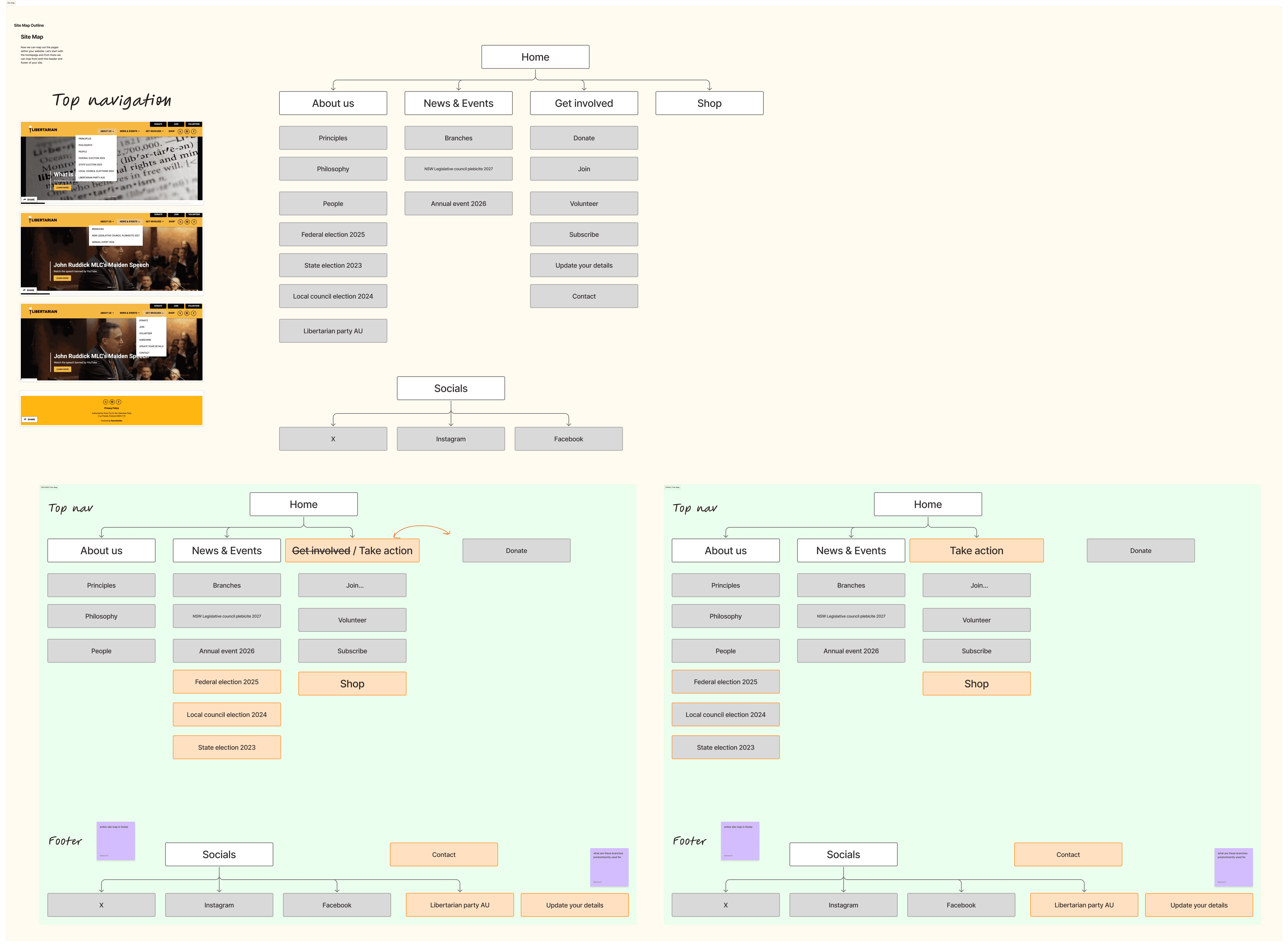
Multiple rounds of stakeholder-validated IA iteration reduced the navigation from 8+ top-level items to four: About Us, News & Events, Take Action, and Donate. Donate was elevated from a buried sub-menu item to a persistent top-navigation position. Navigation labels were reviewed for action orientation "Take Action" replacing the passive "Get Involved" ensured each item communicated clearly what a user can accomplish.

What we delivered
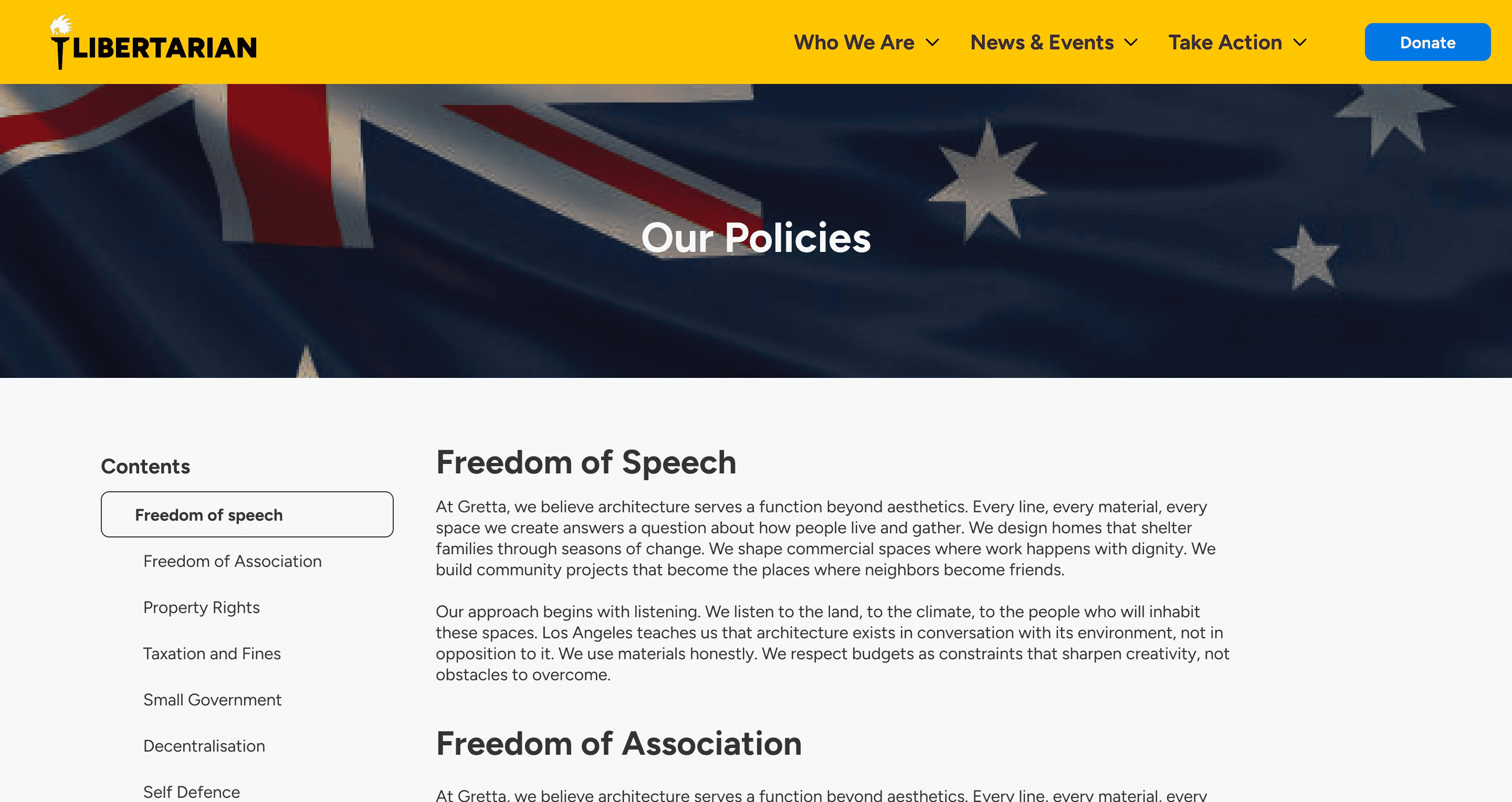
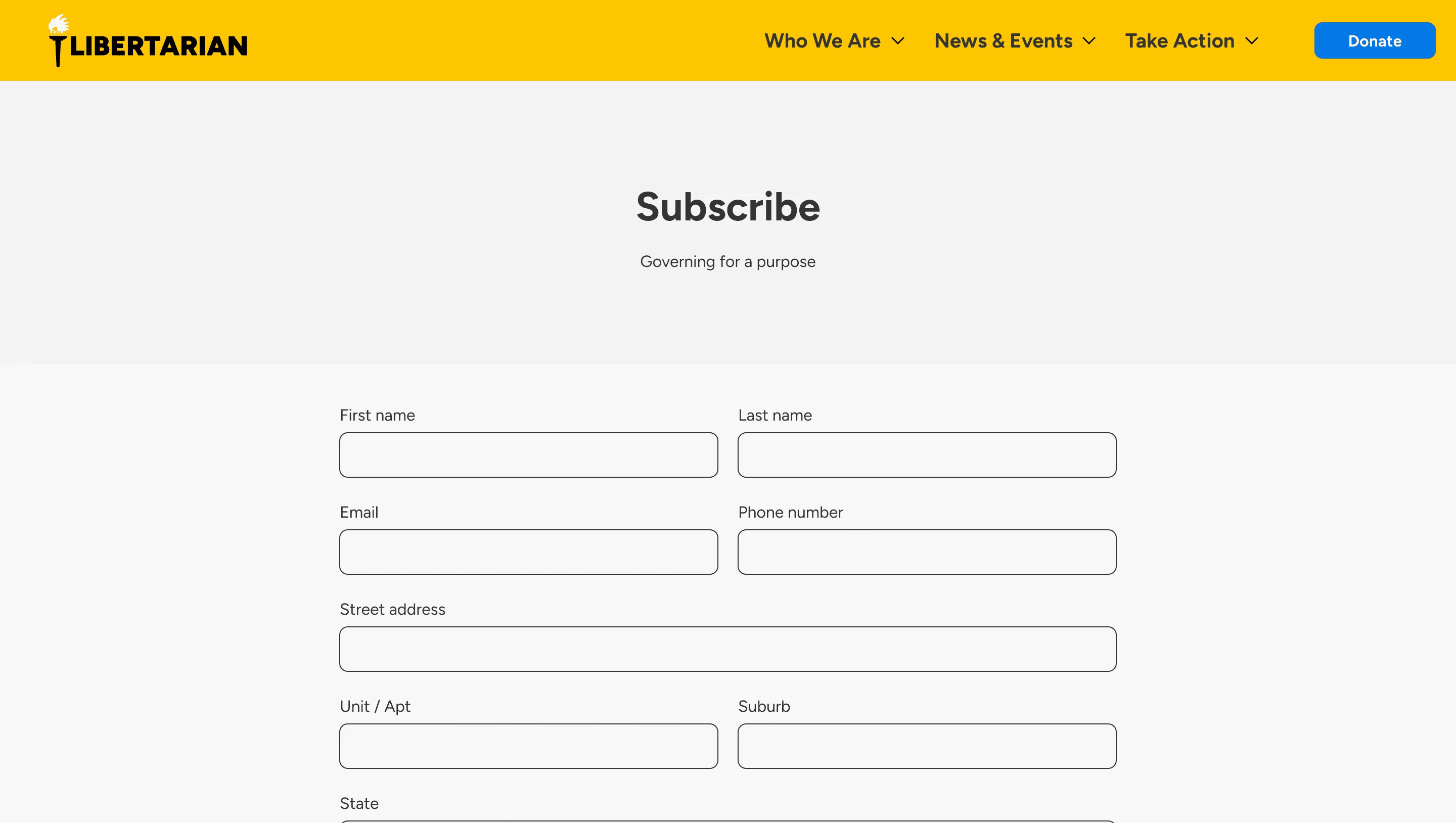
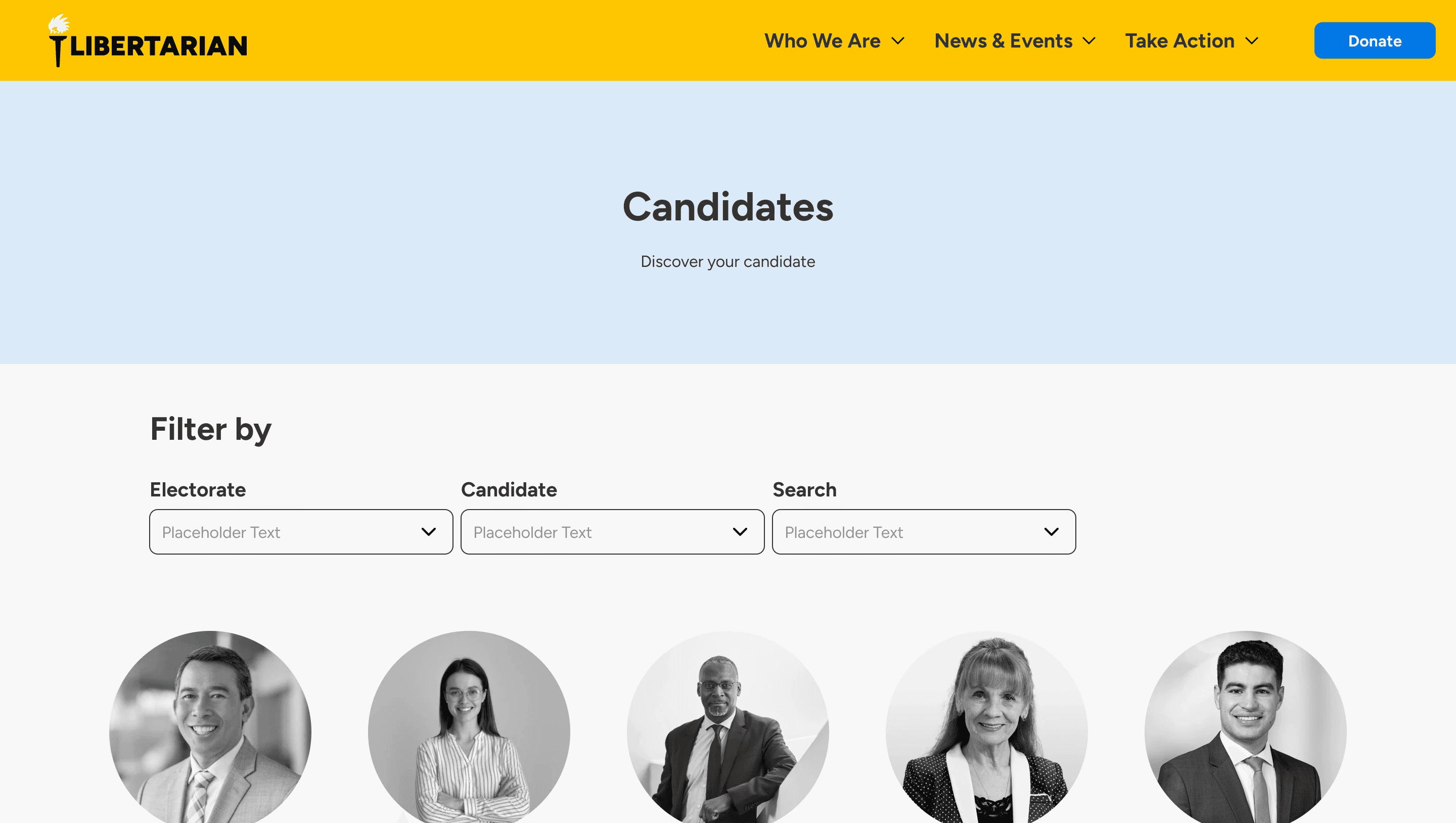
The project delivered a full end-to-end redesign: from validated IA through to a 12+ page hi-fi prototype, a reusable component design system and library, and documented design decisions at every stage. The client received a Figma file and walkthrough with a developer with components named, annotated, and built to specification, down to interactions and responsivity.
Lessons learned
Test and optimise for conversion
If this project had allowed for future vision aims for conversion, I would like to invest in conversion through website optimisation and A/B testing, which would have surfaced issues or provided better conversion outcomes for the party.Design systems pay for themselves
Building the component library and design system allowed me to record and document all possible permutations aside from use cases that would be used for the Libertarians party. With this, being able to conduct design on a component level allowed me to scale faster.
Championing accessibility
Whilst the project prioritised desktop design and a general UI uplift, it was important to understand and influence that accessibility still matters and should be reviewed to match WCAG guidelines as closely as possible. Moving forward I would continue to champion accessibility in simple guidelines such as smallest tappable button sizes so that the UI still remains usable.