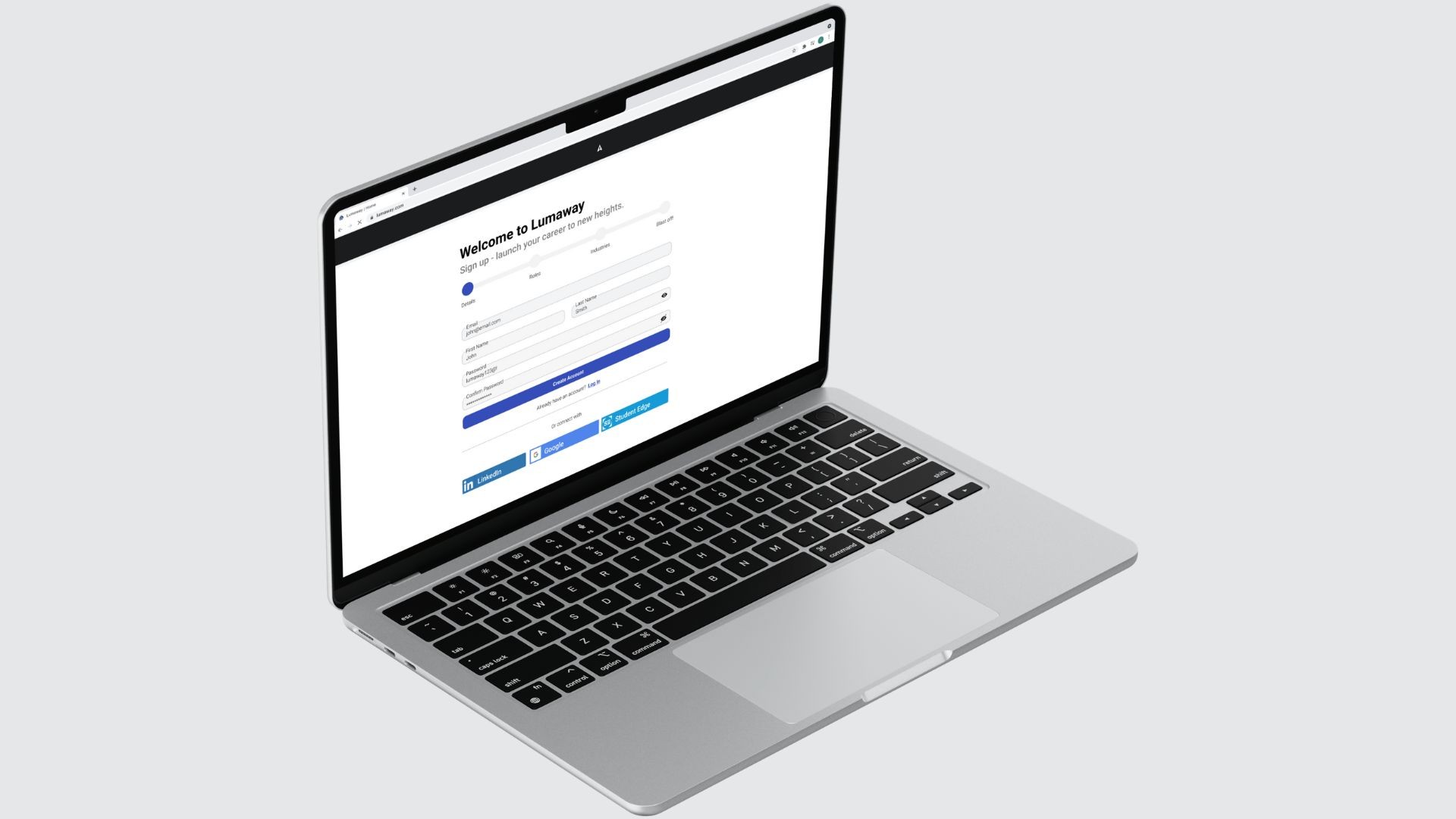
Lumaway Onboarding
ROLE
RESULTS
12% increase in marketing to user turnover
35% increase in total active users
Secured strategic partnership with StudentEdge
PROBLEM
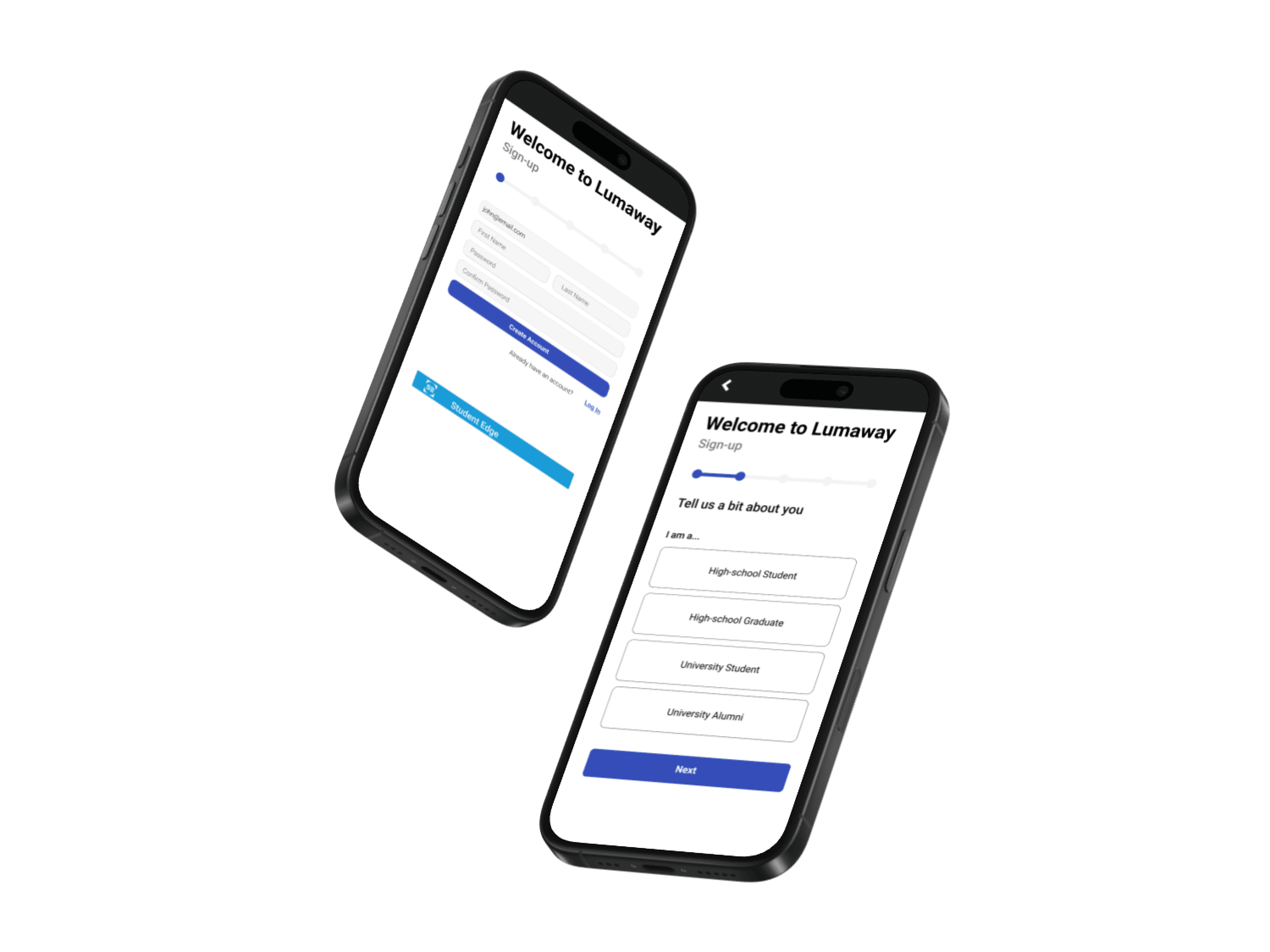
Lumaway, a careers platform connecting university students with industry mentors, had no existing onboarding experience. The platform required a personalised onboarding flow capable of serving two distinct user groups: university students and final-year high school students, while supporting a strategic expansion into a new audience segment via a partnership with Student Edge.
Establishing user needs and design direction
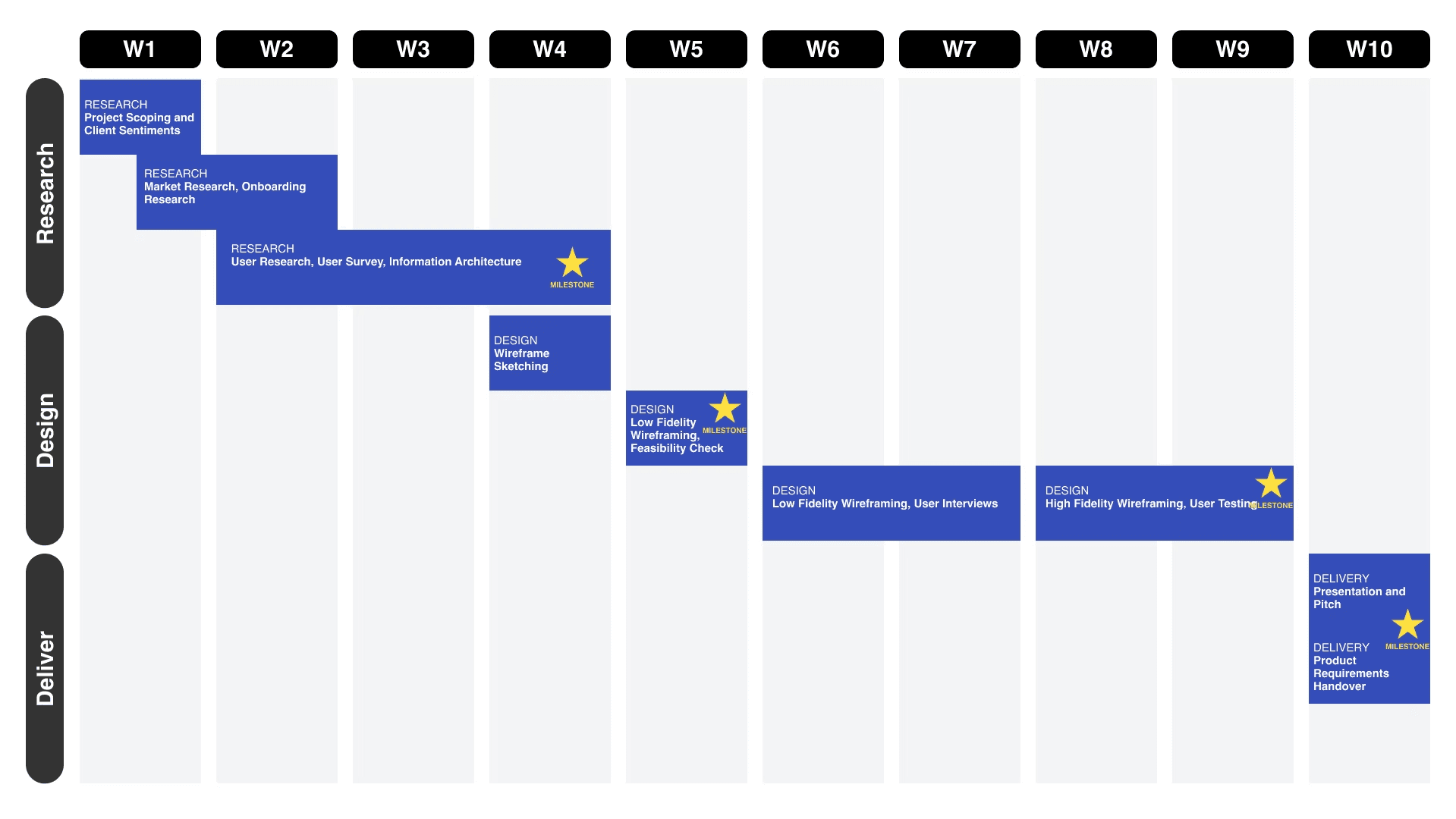
As project lead, I established a product roadmap to structure team deliverables and maintain accountability to stakeholder timelines across the 10-week engagement. The scope was defined collaboratively with Lumaway and comprised three phases: user research, onboarding flow design in Figma, and iterative prototyping through to a development-ready state.
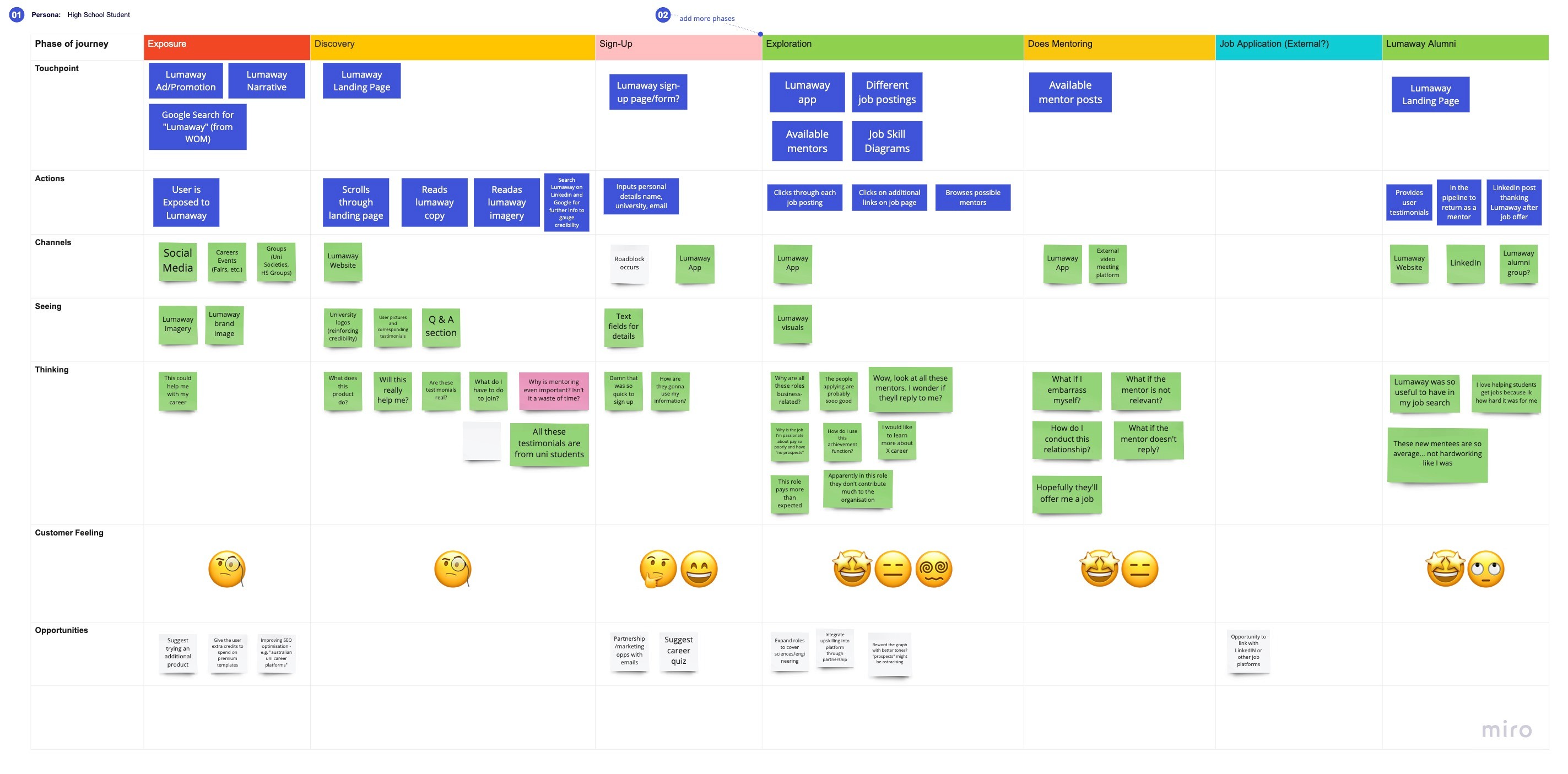
A user survey of 43 respondents spanning Commerce, Business, Medicine, and other disciplines surfaced three key findings: users strongly preferred a quick yet personalised onboarding experience; a significant proportion of high school students were uncertain about their career direction, informing the need for progressive disclosure; and 72.7% were already familiar with careers platforms, requiring Lumaway's value proposition to be communicated clearly from the outset. Research findings were synthesised into an information architecture diagram and user journey map, with mentor-guided refinement identifying edge cases including external sign-in options for Student Edge and Google users.

Iterative prototyping, validation, and handover
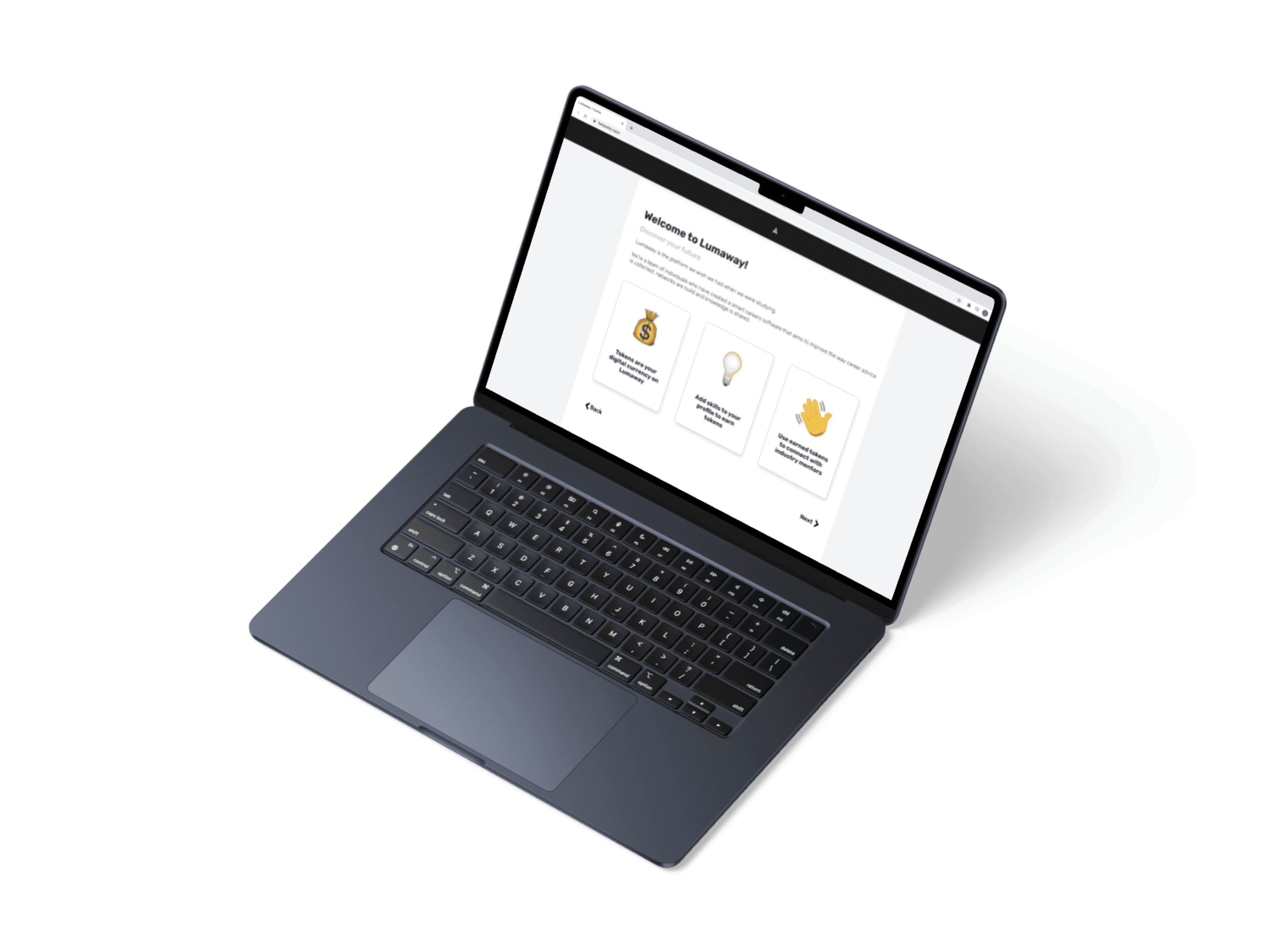
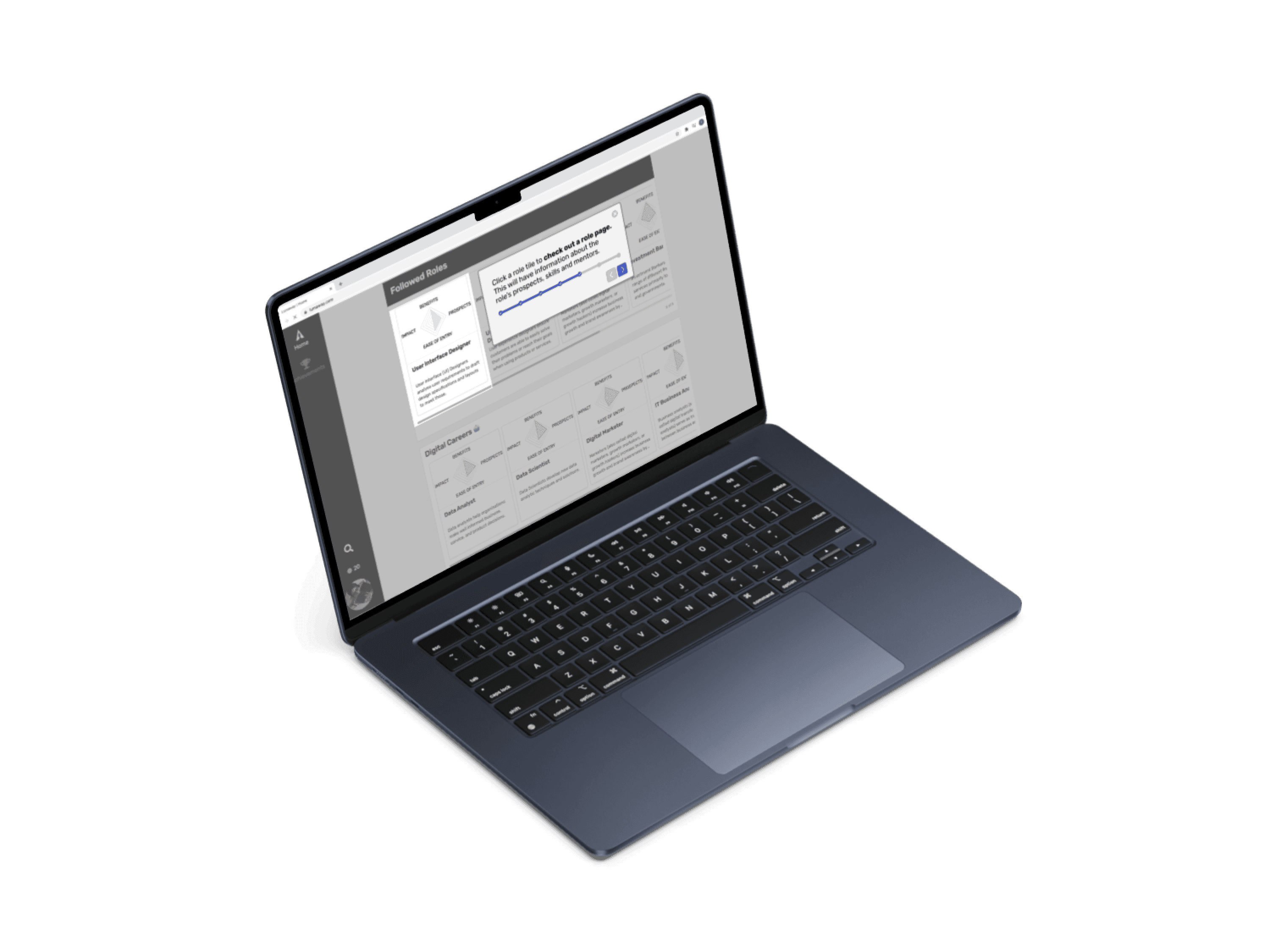
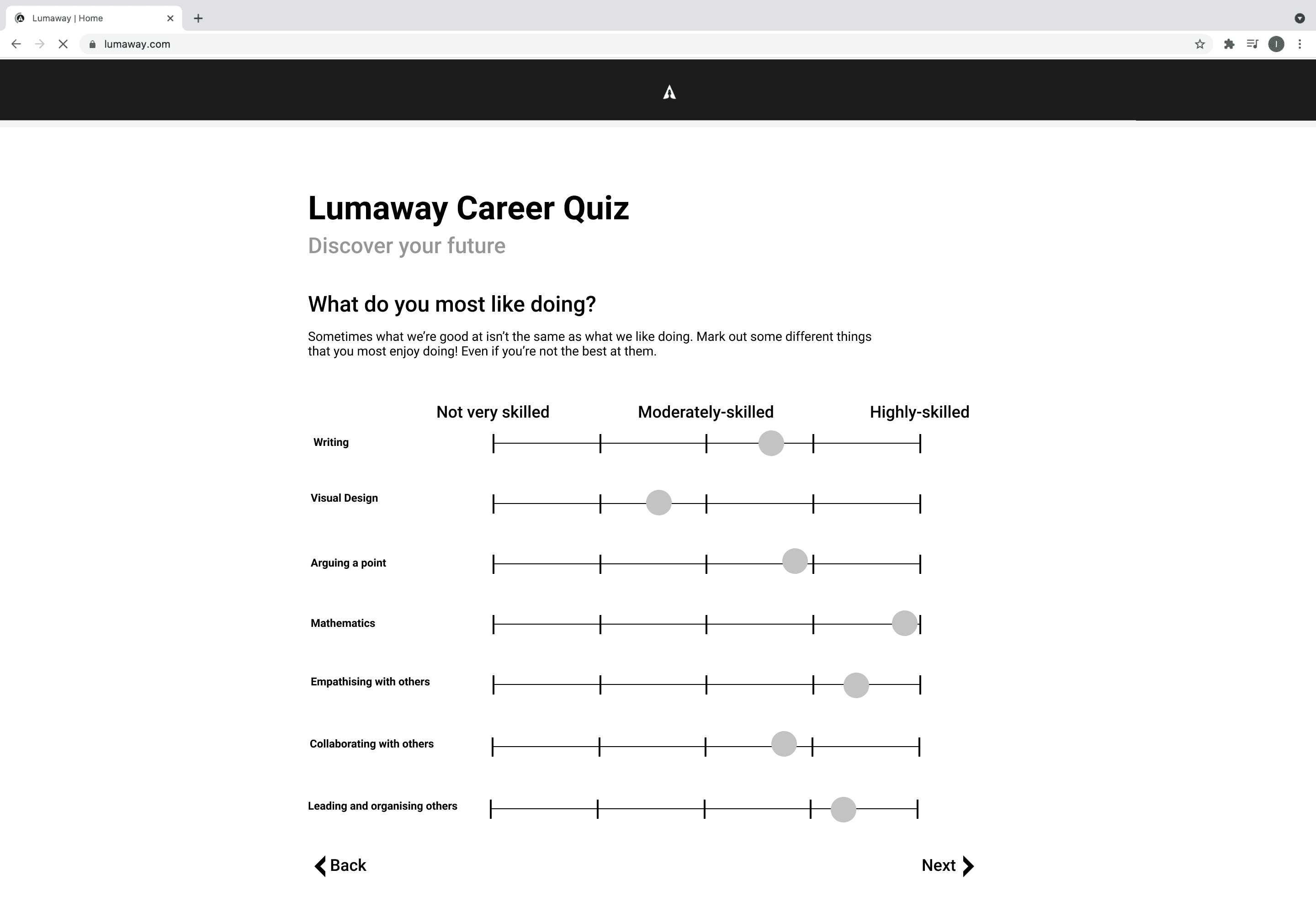
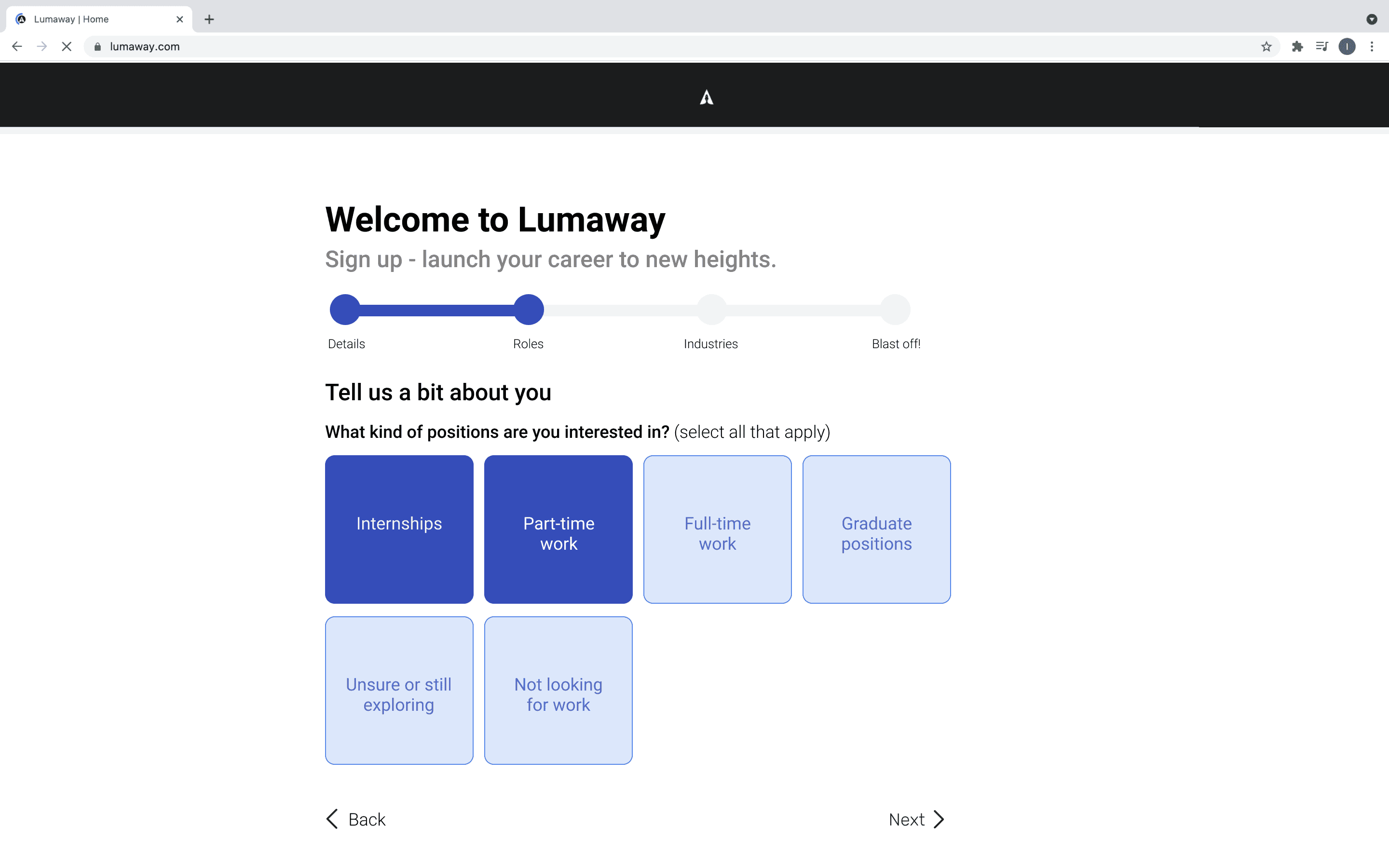
Low-fidelity wireframes were developed to test layout assumptions and journey logic with users, the project mentor, and the client. Four usability interviews yielded actionable findings across accessibility, copy clarity, and journey completeness, most notably identifying the need for opt-out pathways and error state designs, which had not been included in the initial scope. These were incorporated into the high-fidelity designs alongside copy refinements tailored to the distinct voice appropriate for each student audience. Final designs were presented to stakeholders end-to-end, covering design rationale, last minute pivots, success metrics, and recommended next steps. A Product Requirements Document was produced to support a structured handover to the client's development team.
Lessons learned
Satisfaction of Stakeholder Requirements in Project Scoping
As the product lead, it was important to satisfy all stakeholders to the best of my ability. As much as it would be preferred to complete all the actions given in our initial project scope, putting designers first as a team project we completed together was paramount. This meant communicating deliverables we did not deem was within project scope, detailing reason and actions where all stakeholders would gain most value.
The Importance of Copy
When designing our solution for Lumaway’s onboarding service, we were able to focus on how we would tailor the personalised experiences for both high school and university students. This included details with copy and the way we worded specific experiences and user journeys, taking on a lighter tone through our onboarding walkthroughs and making the copy as simple as possible for new users on the Lumaway platform.
Accessibility of Choice
With our primary deliverable being to design the onboarding service for Lumaway with creative freedom from no prior onboarding experience, it was easy for the team to get carried away with creating walkthroughs, career quizzes and personalisation. With the help of our mentor, we were able to realise that these were not the only deliverables to be considered, but external choices, such as opting out of our walkthroughs and error states that were also key to the journey were to be explored, researched and designed.